Spacetime is defining and pioneering the Intent-Based Autonomic Security category — compressing Mean Time to Identify (MTTI) and Contain (MTTC) from 276 days to minutes, so organizations can finally stop breaches at the speed threats move, with human oversight at every decisive step.
More tools haven't made organizations safer. The modern enterprise deploys dozens of security tools — SIEM, SOAR, EDR, CNAPP, DSPM — each generating signals, each requiring human judgment. The result is alert fatigue, tool and work sprawl, and response gaps measured in months while threats operate in milliseconds.
Autonomous playbooks automate tasks but hit timeout ceilings — leaving sophisticated threats and multi-year APT campaigns undetected. AI copilots assist analysts but can't act. Agentic platforms chain AI steps together but remain as brittle and bounded as the playbooks they replace.
The truth is that your organization cannot afford to wait almost a year to detect and contain a breach. However, that’s exactly the situation your organization faces today — 276 days of exposure, increasing damage, rising costs, and growing liability while their tools remain idle, waiting for instructions.
1 Mastercard Signals, 2024.
Securing Trust: Insights from the Frontlines of Cybercrime.
2 IBM Security.
Cost of a Data
Breach Report 2025: The AI Oversight Gap.
3 Hudson Institute, April 2023.
Prosperity at Risk: The Quantum Computer Threat to the US Financial
System.
The 276-day breach cycle isn't a detection problem — it's an architecture problem. Every tool in your stack waits for instructions. Spacetime never waits. A fully autonomic security fabric that continuously coordinates across endpoint, identity, cloud, data, and AI — simultaneously — compressing mean time to identify and contain from months to minutes, without adding another tool to manage.
Multi-year campaigns stay hidden because tools react to events, not intent. Spacetime continuously models the trajectory of every observed signal — distinguishing adversarial shaping from legitimate behavior months before exfiltration, not 276 days after the damage is done.
Unlike autonomous playbooks that time out and agentic chains that stall at every hop, Spacetime's control architecture runs continuously — tactical loops for machine-speed response, strategic loops for long-horizon adaptation, with no resets, no ceilings, and no manual maintenance.
Humans can't keep pace with machine-speed threats — but they shouldn't have to act on every decision. Every autonomic action is validated against declared policy before execution, so your team stays in control of what matters without becoming the bottleneck.
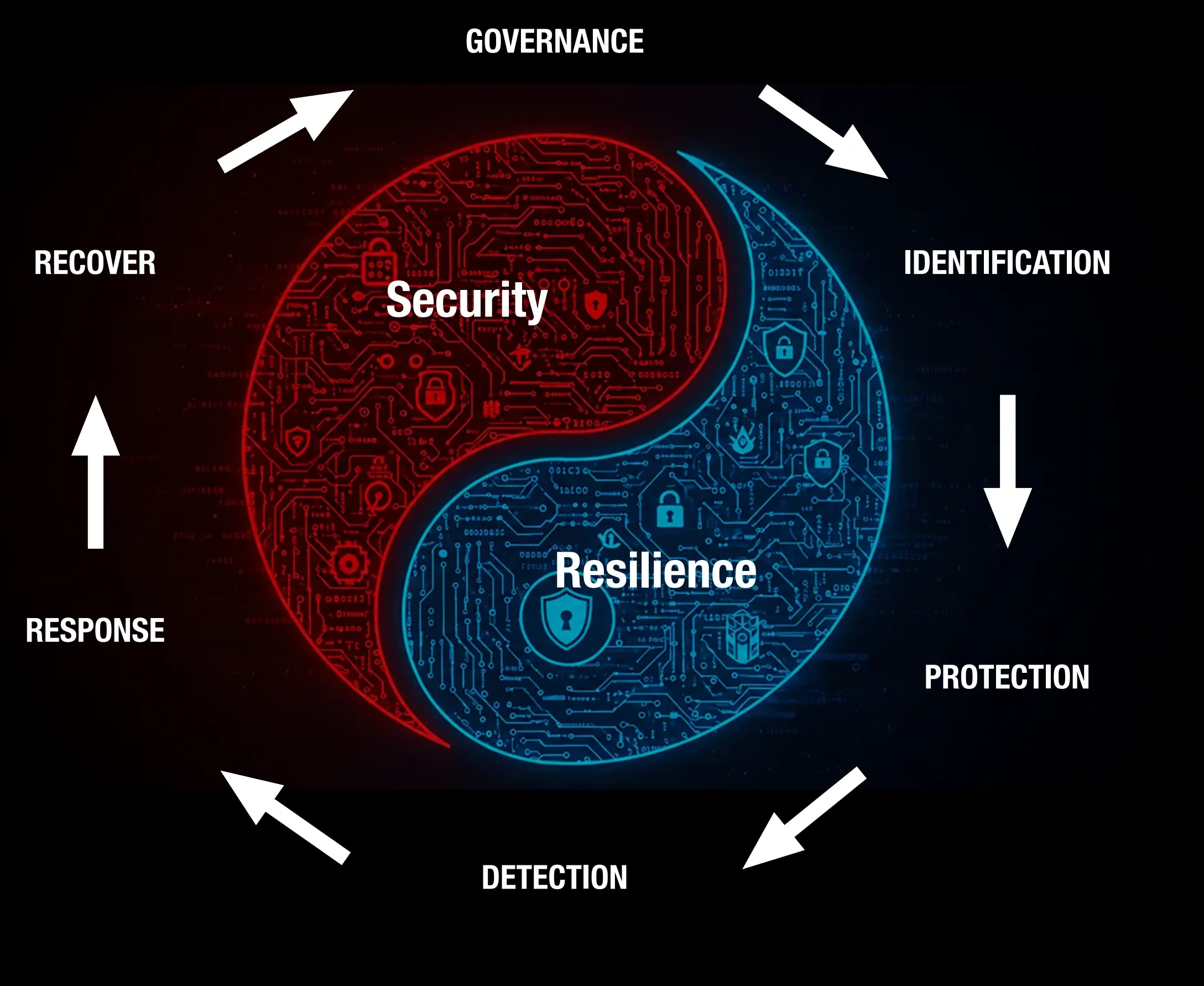
Every signal — across cloud, identities, AI, endpoints, data, and APIs — enters a loop-control architecture. Every action is verified — bounded, reviewable, and aligned with your organization's goals through continuous human oversight, policy-bound escalation, and a governed interface that keeps humans in control at every decisive step. No timeout. No manual reset. The result is faster containment, stronger resilience, and human-governed control at machine speed.
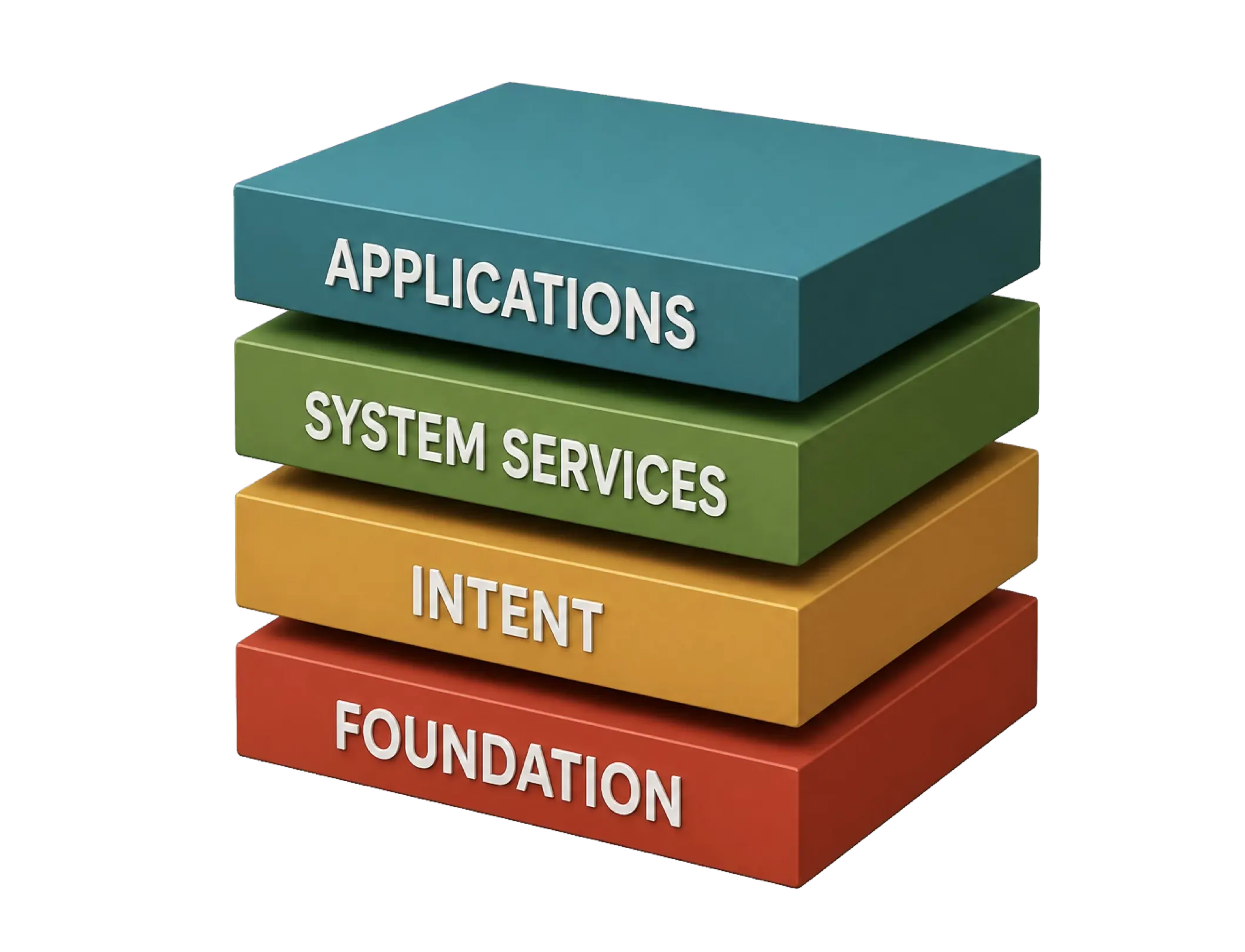
In addition to Autonomic Security, Spacetime is pioneering and defining a new paradigm where security doesn't react to data; it reasons, continuously building a living model of your environment that drives every decision, bounds every action, and improves with every cycle.
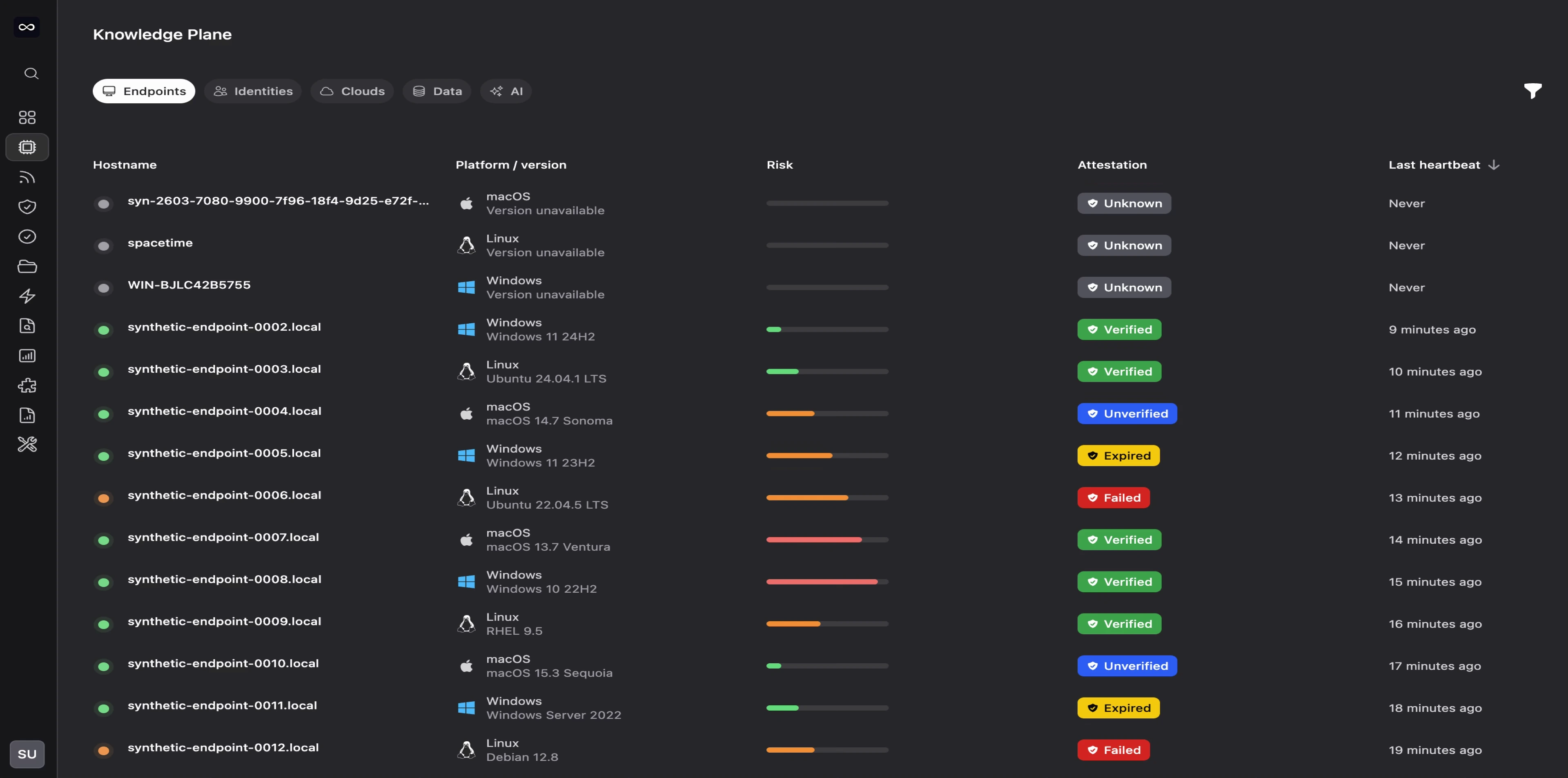
Every event — across identity, cloud, endpoint, data, and AI — is normalized, correlated across planes, and transformed into structured understanding. Not logs. Not alerts. A Knowledge Plane for Security.
Decisions emerge from enriched, cross-plane context — not static rules or playbooks. Intent you set. Policy boundaries you define. The system reasons within them.
When the system understands your environment, every response is grounded — not guessed. Actions are bounded by the policy and intent you define, executed at machine speed, and verified.
We're onboarding a select group of enterprise security teams to help shape the Spacetime fabric with us. Let's connect.